

Who is DiFluid?
DiFluid is the product brand of Shenzhen Digitizing Fluid Technology Co., Ltd. DFT is a technology company that was founded in March 2021 in Shenzhen, China. DiFluid was established by Linus Peng, who left a PhD programme to develop the company. DiFluid's mission is to provide coffee professionals and enthusiasts with laboratory-grade measurement tools.
The company holds over 20 core patents in the fields of optics, electronics, algorithms and mechanical design, and all development and manufacturing takes place in-house. All DiFluid devices are compatible with a single platform, CoffeeOS, which facilitates data-driven management across the entire coffee production process, from the initial green coffee stage to the finished cup.
From liquid to data point
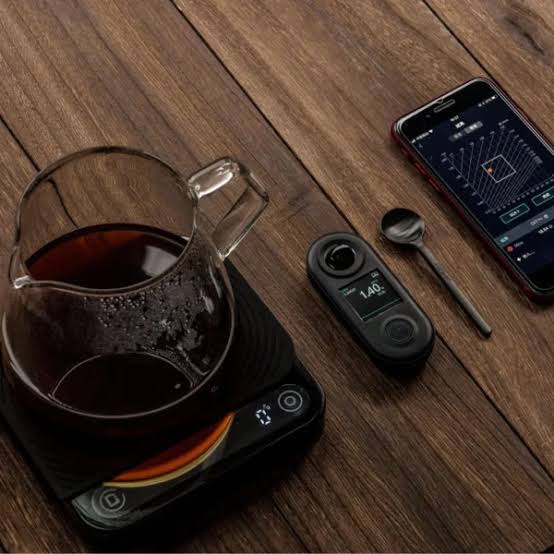
DiFluid's inaugural product was a digital coffee refractometer that rethought the ageing design of traditional handheld units. Rather than the fragile CCD sensor that necessitates a lid, DiFluid utilises a larger 2D CMOS image sensor that is able to tolerate misalignment, functions without a lid and is more robust.
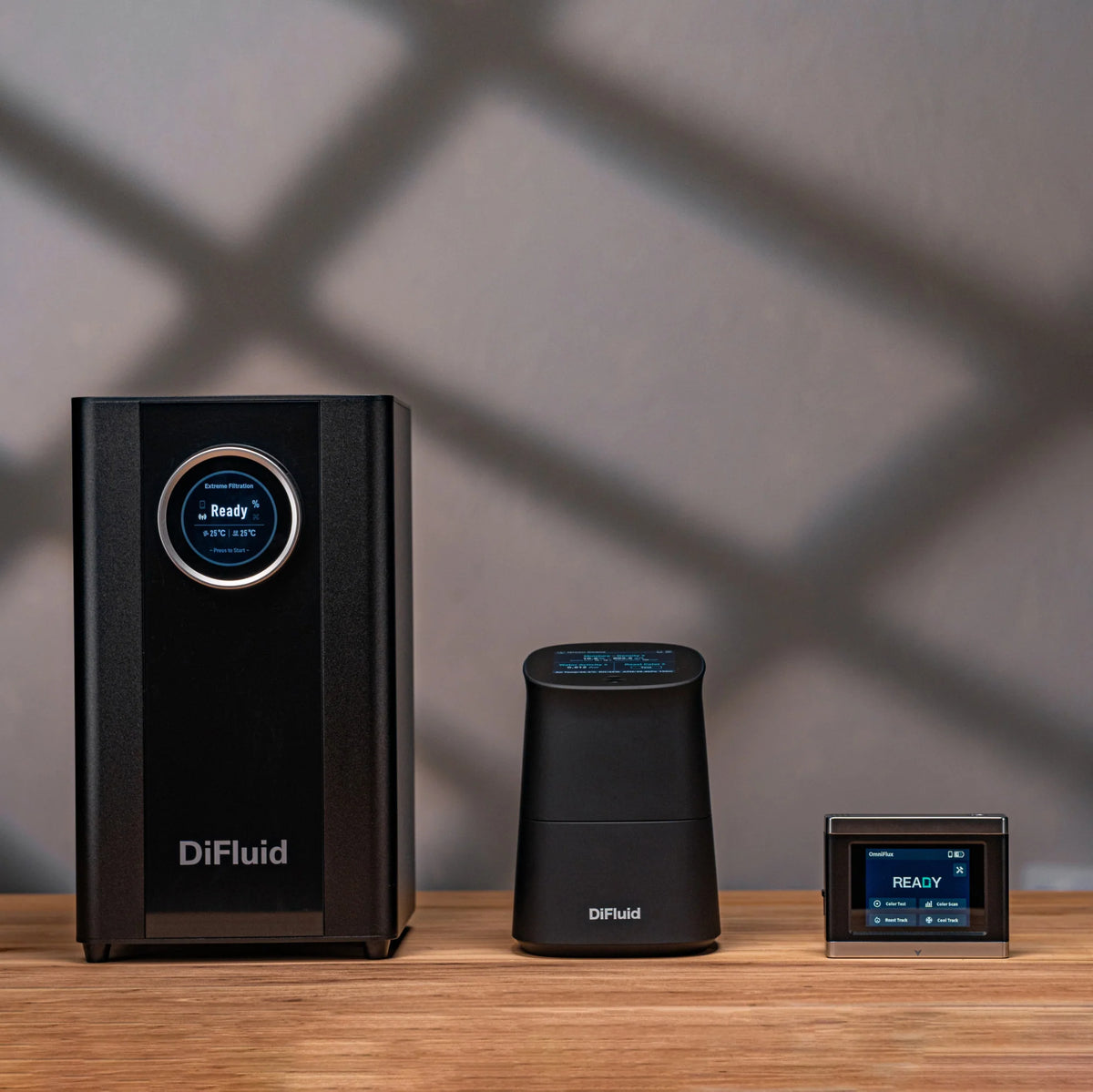
Since that time, the company has expanded its range of products to include not only liquids but also solids. These include precision brewing scales, as well as analytical equipment for particle size and roast colour, moisture and water activity measurement, and roast smoke filtration. The key point to note is that each measurement becomes a data point which can be stored, shared and reproduced.
One ecosystem, one app
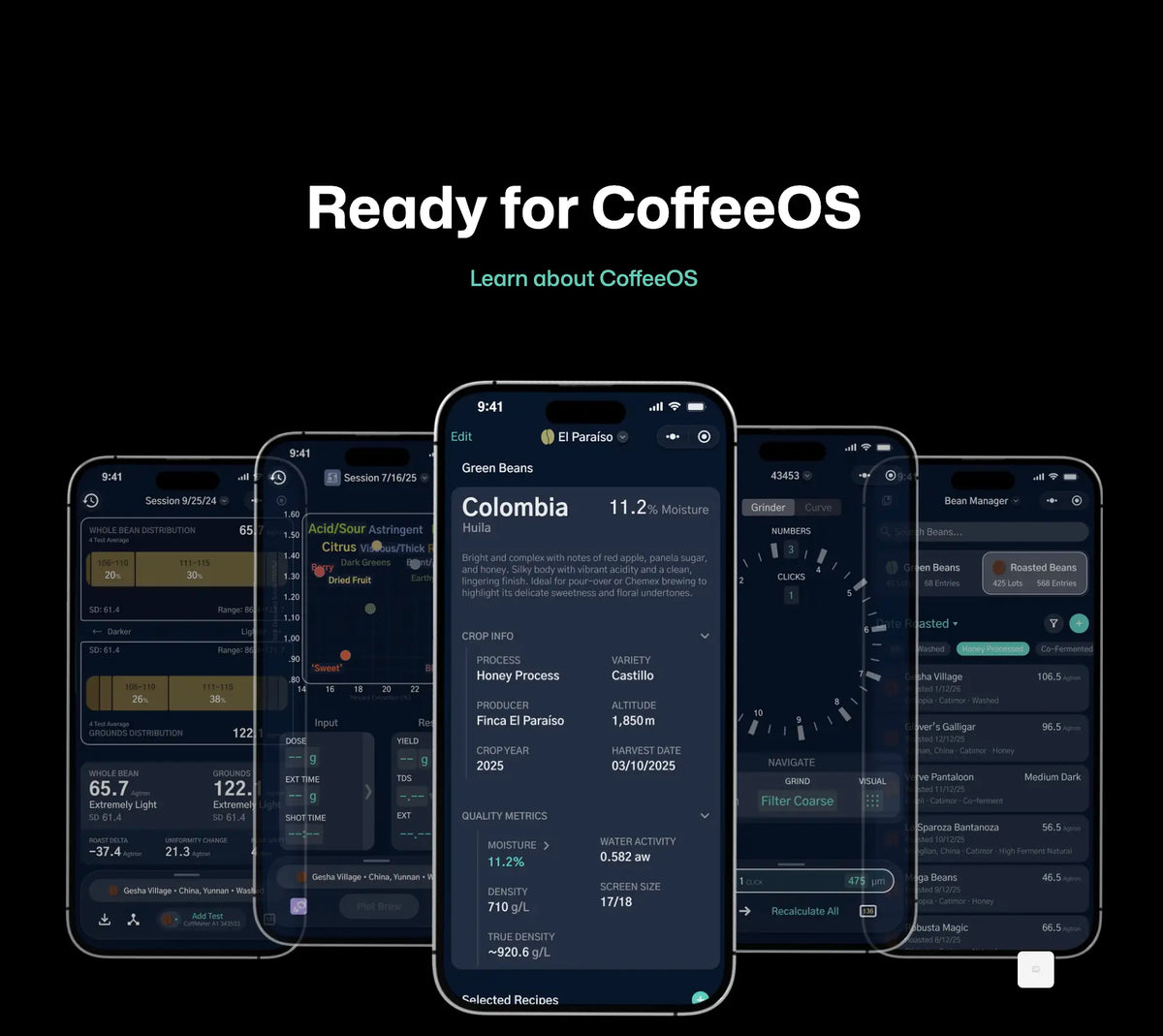
The heart of the system is CoffeeOS (formerly the DiFluid Café app). All the devices connect using Bluetooth and send their readings to a central database. The Brew Control Chart shows every step in the brewing process and calculates how much of the hops and grain are used. This makes it easy to make the same beer again.
OTA firmware updates are free and keep the hardware current for years. This means that the scale you buy today will get better over time, not older. Important: the scale and refractometer can be used on their own, so you don't need a phone. The connectivity is a bonus, not something you need.
A quality lab for your roastery, pocket-sized
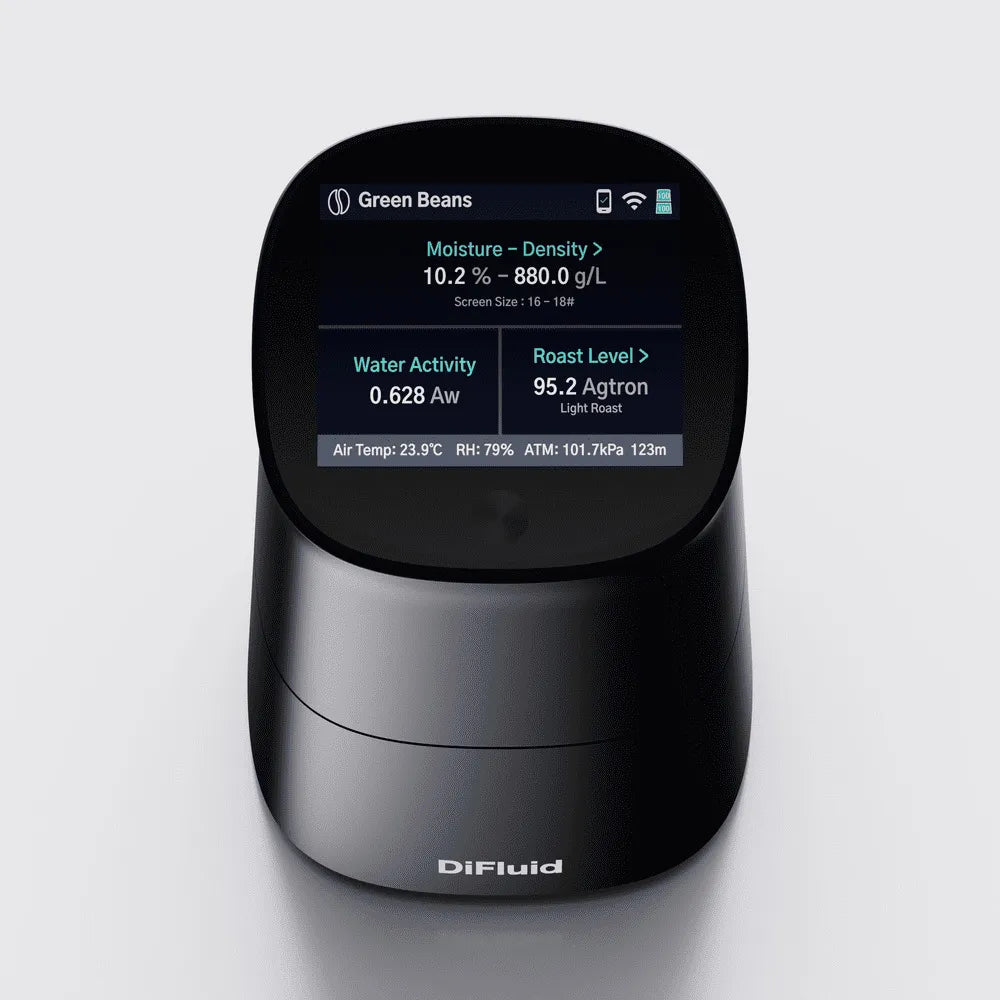
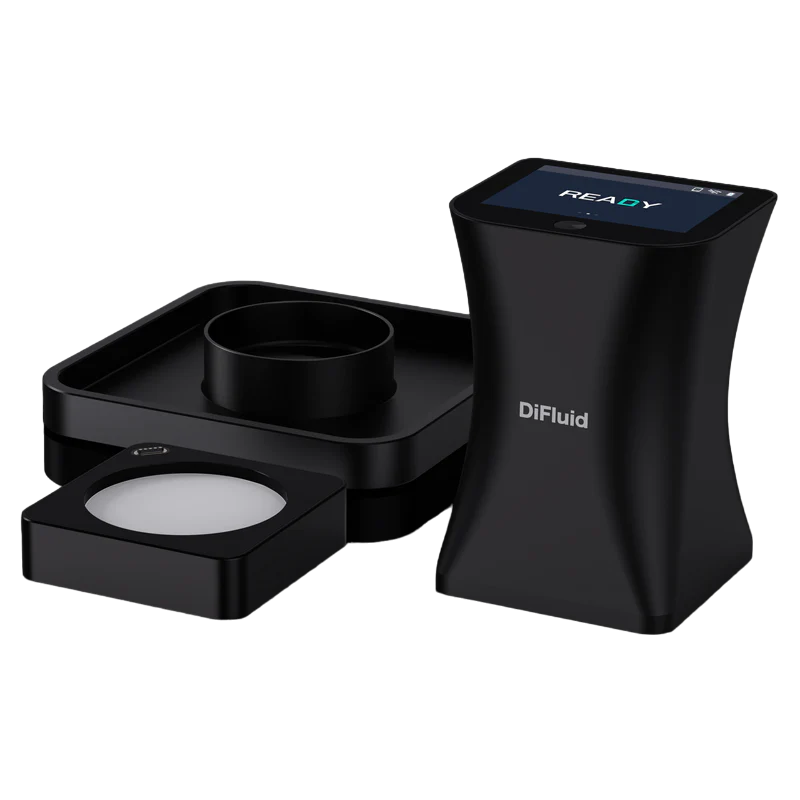
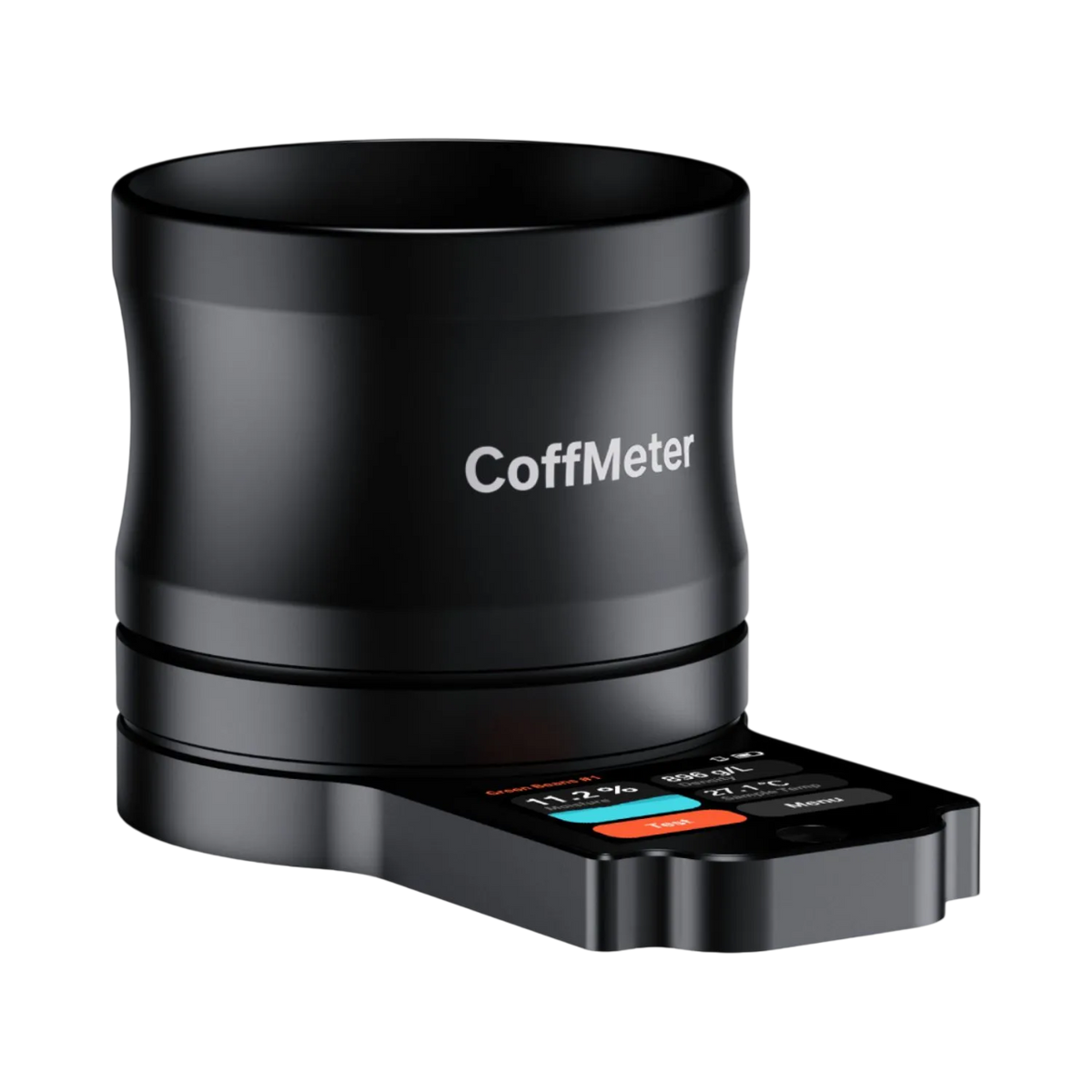
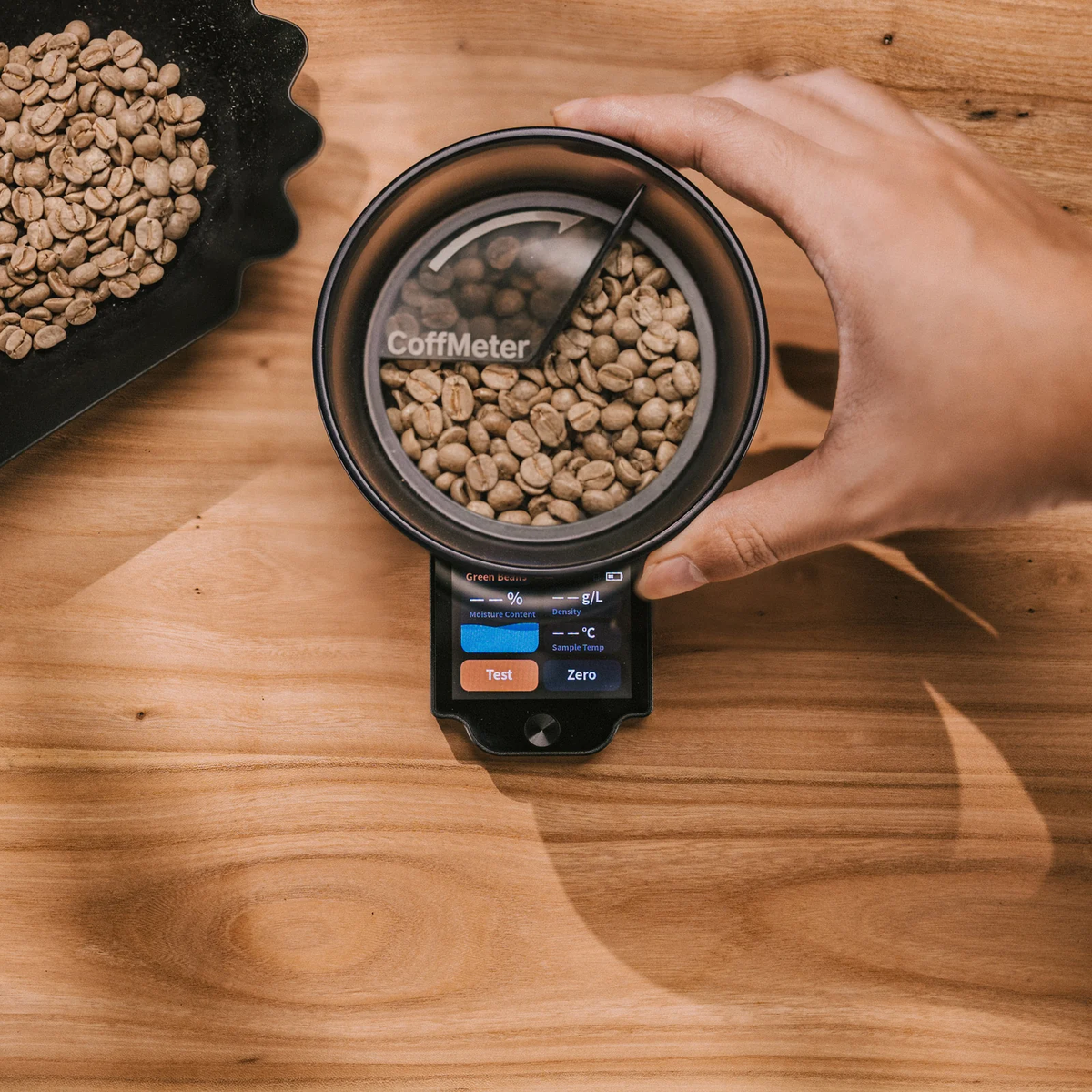
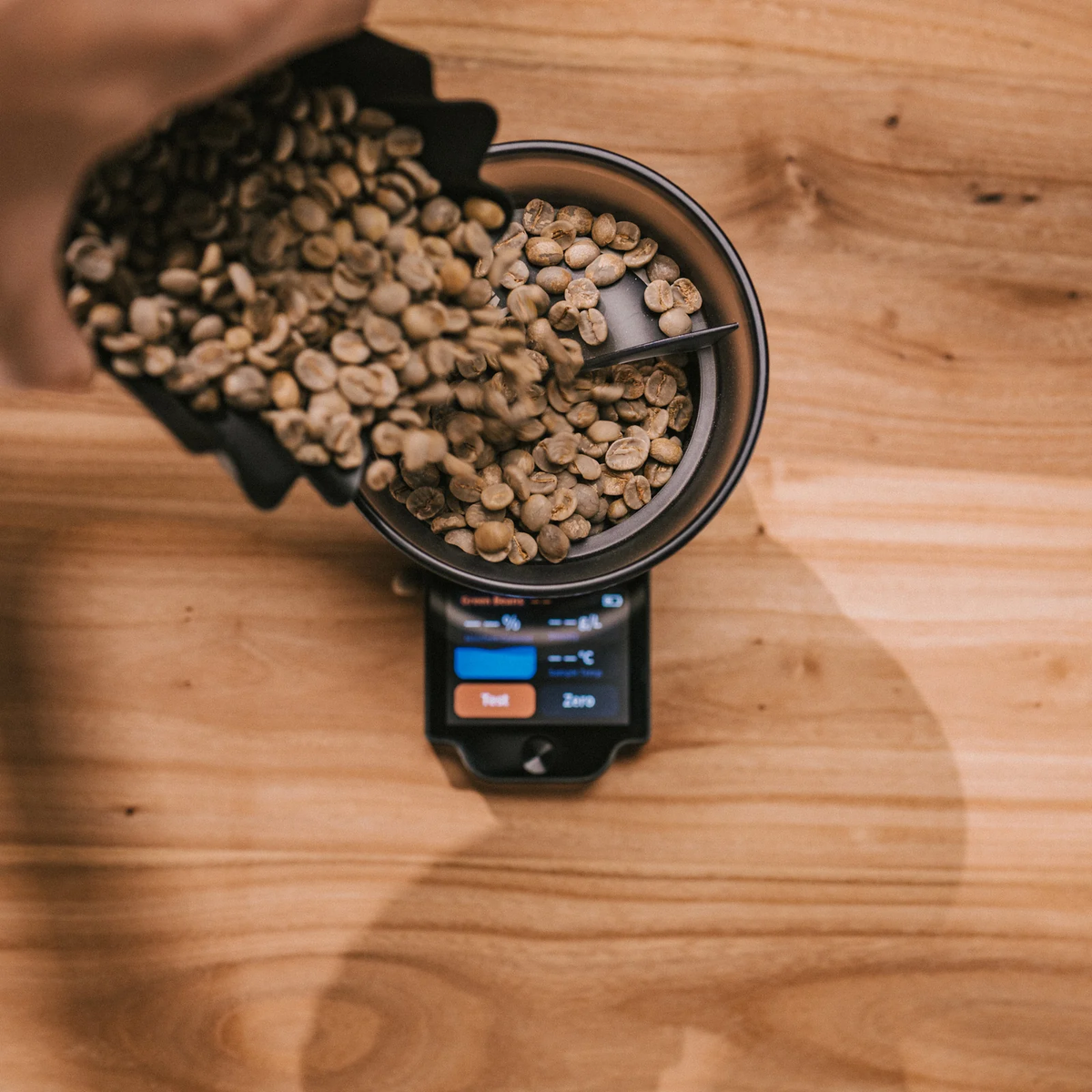
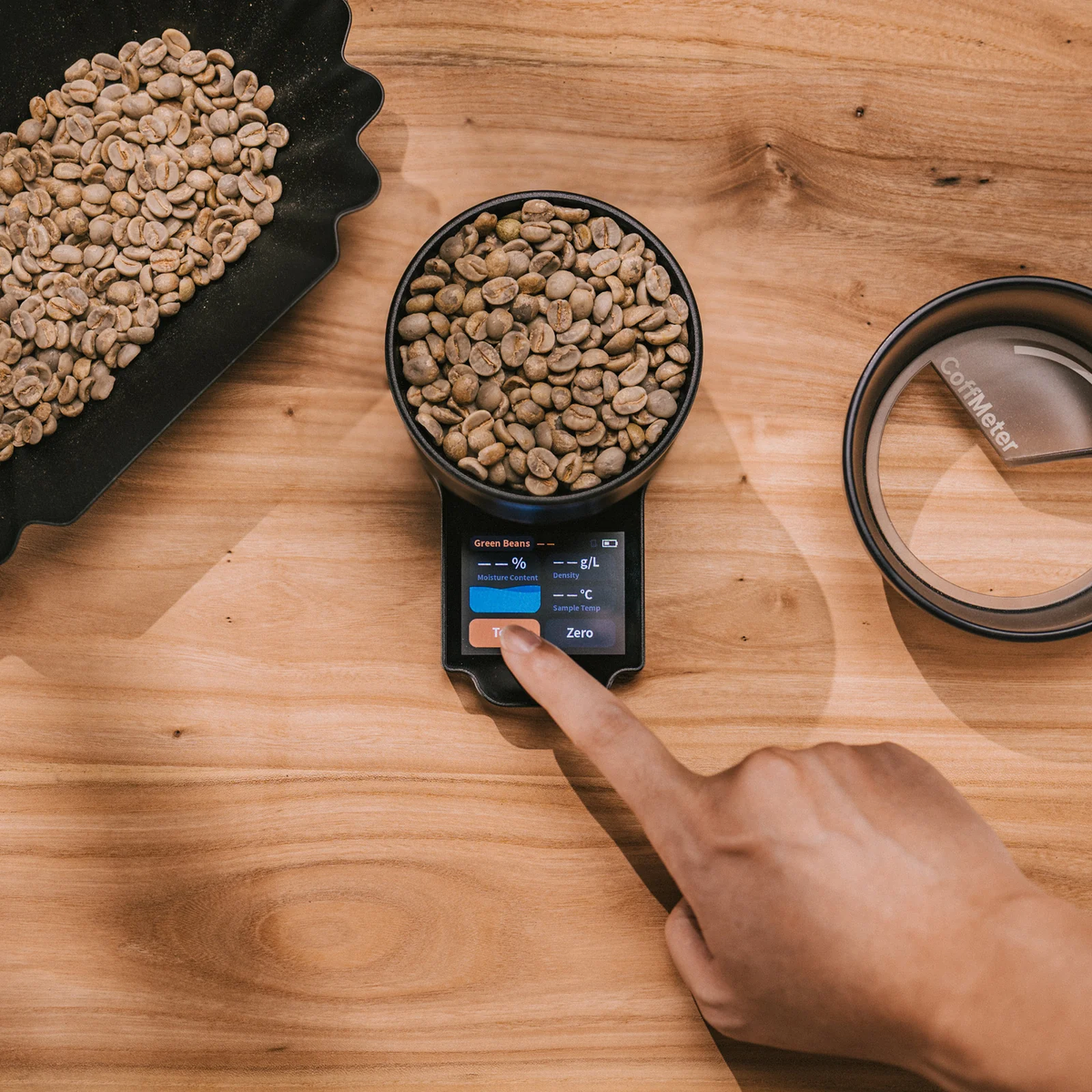
DiFluid Omix Plus Green Coffee & Quality Analyzer
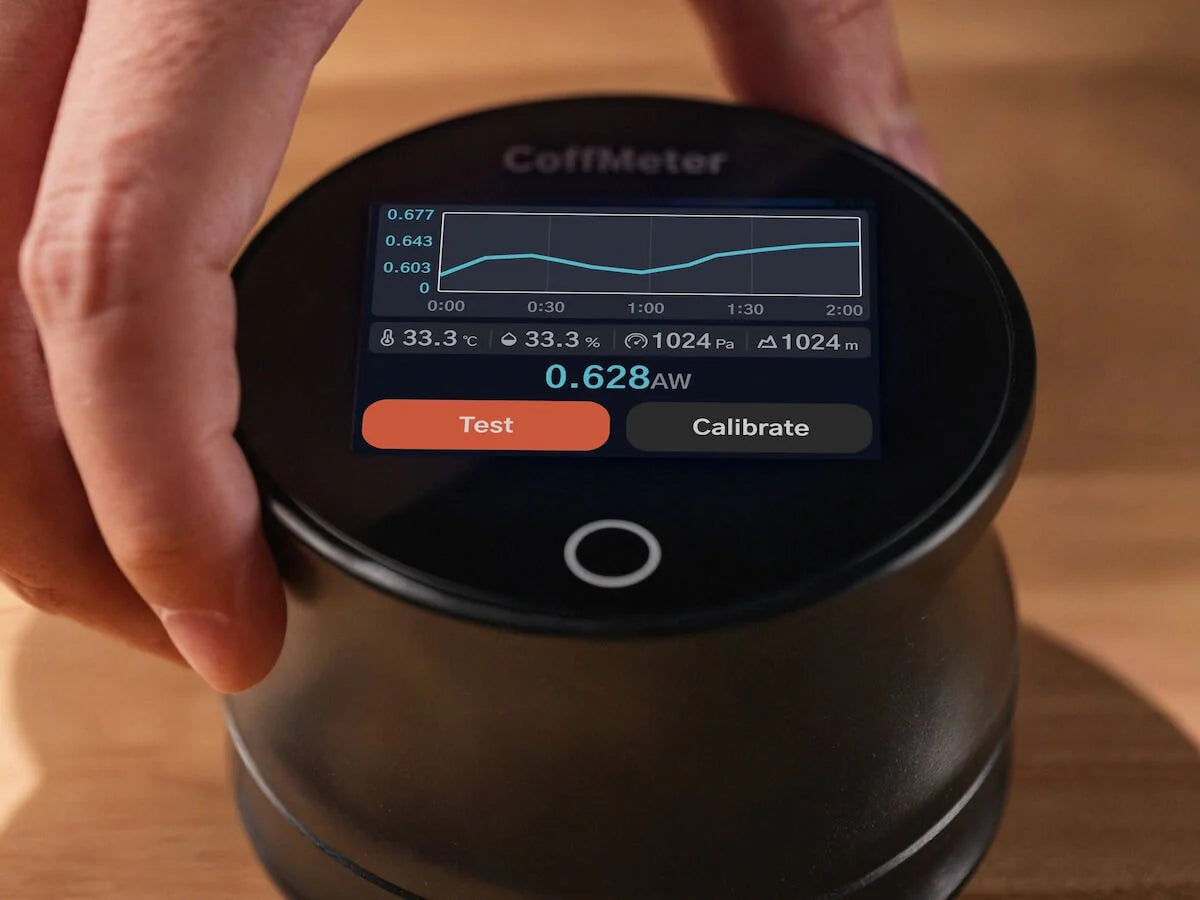
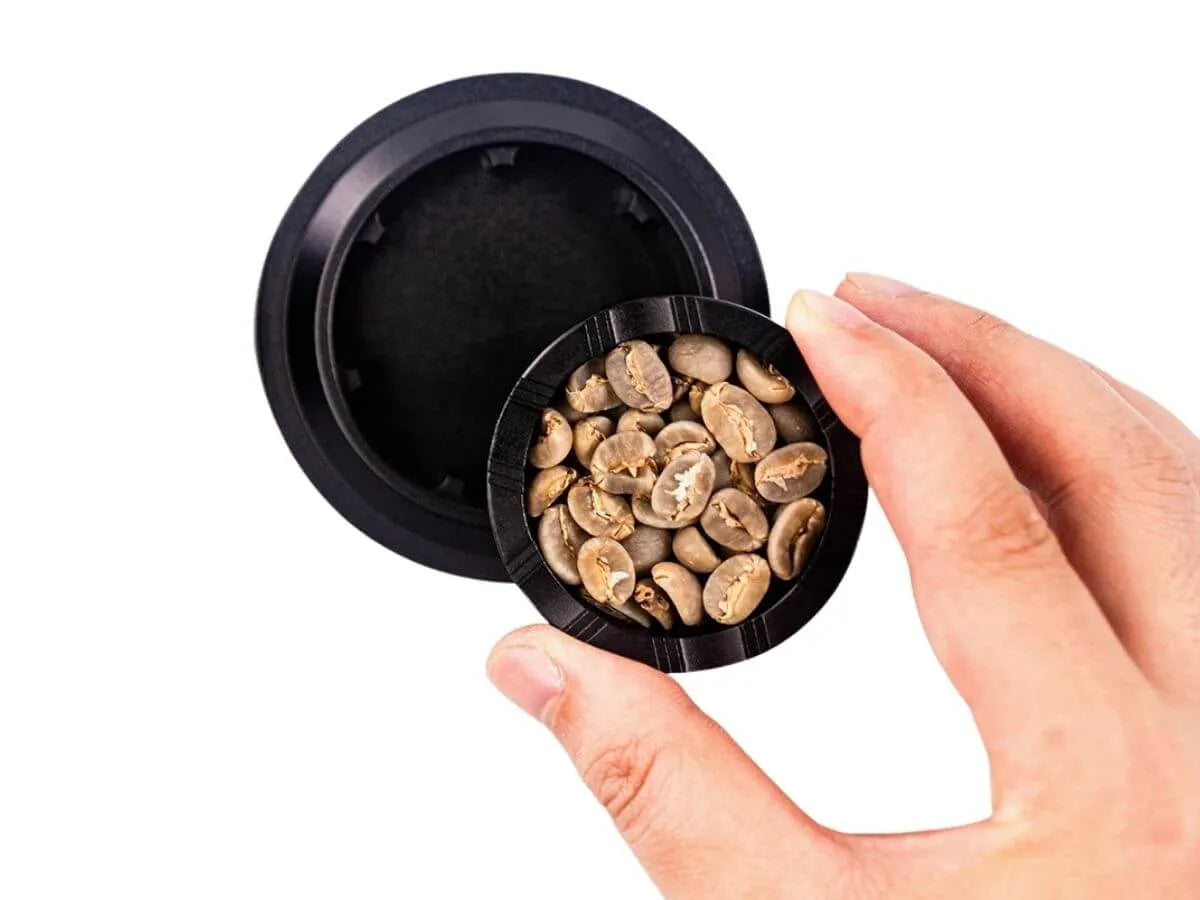
The Omix Plus can measure water activity (0.2–1 Aw, ±0.005), moisture (1–60%, ±0.1%), density (0–1500 g/L, ±0.5), screen size and roast level — all at the same time.
For water activity, it uses the chilled-mirror dew point method, which is recognised around the world. It gives a result in less than 30 seconds. It can automatically recognise different types of coffee (e.g. green, parchment, roasted, ground), has a touchscreen interface and runs on CoffeeOS. This makes it a useful tool for roasters, Q graders and quality labs.
One drop of coffee, one number you can trust
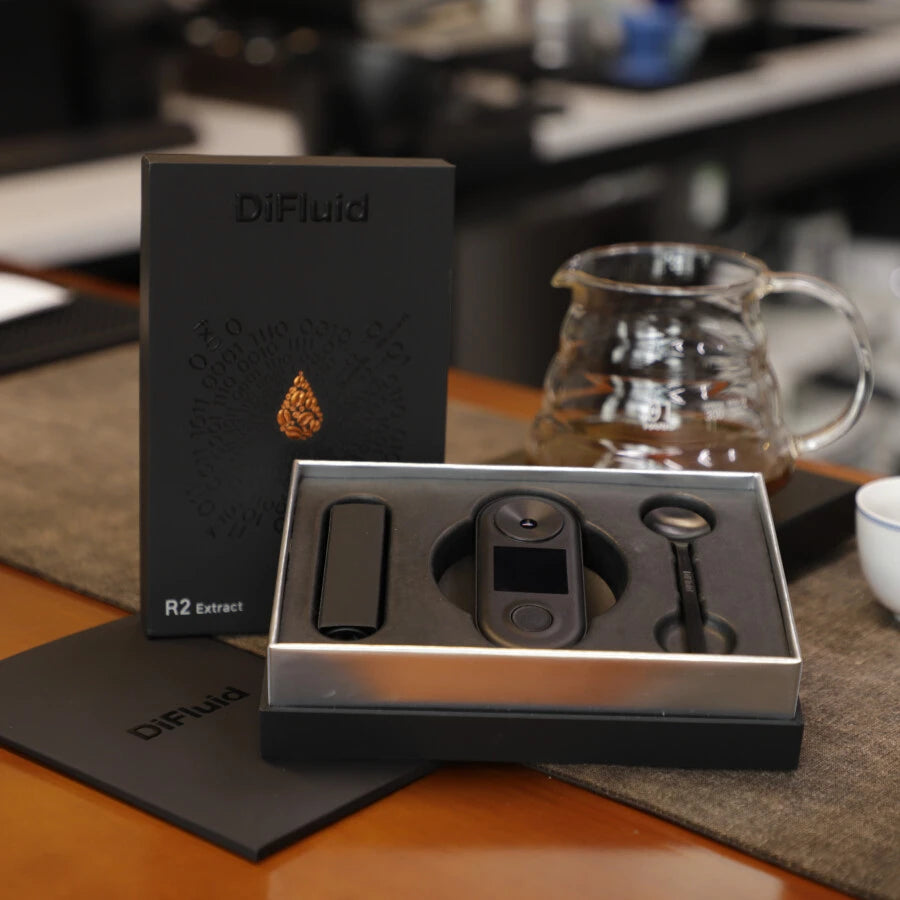
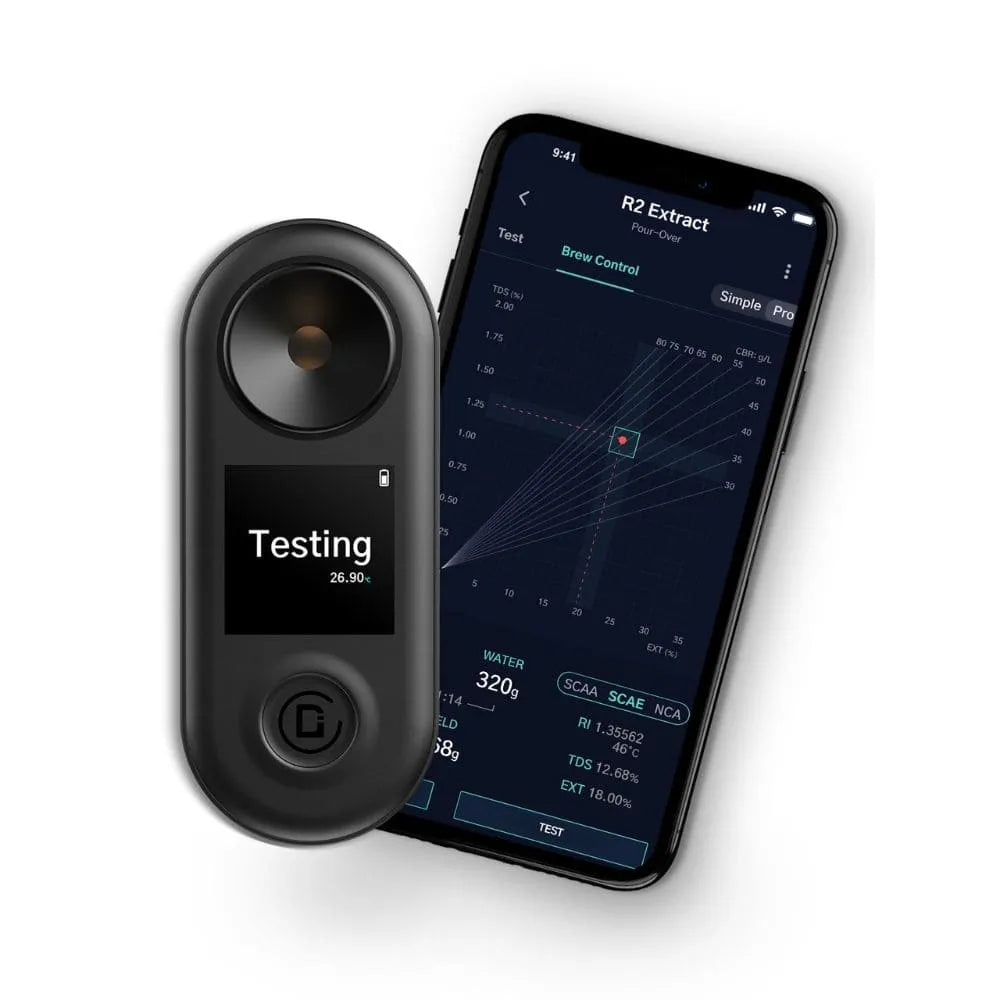
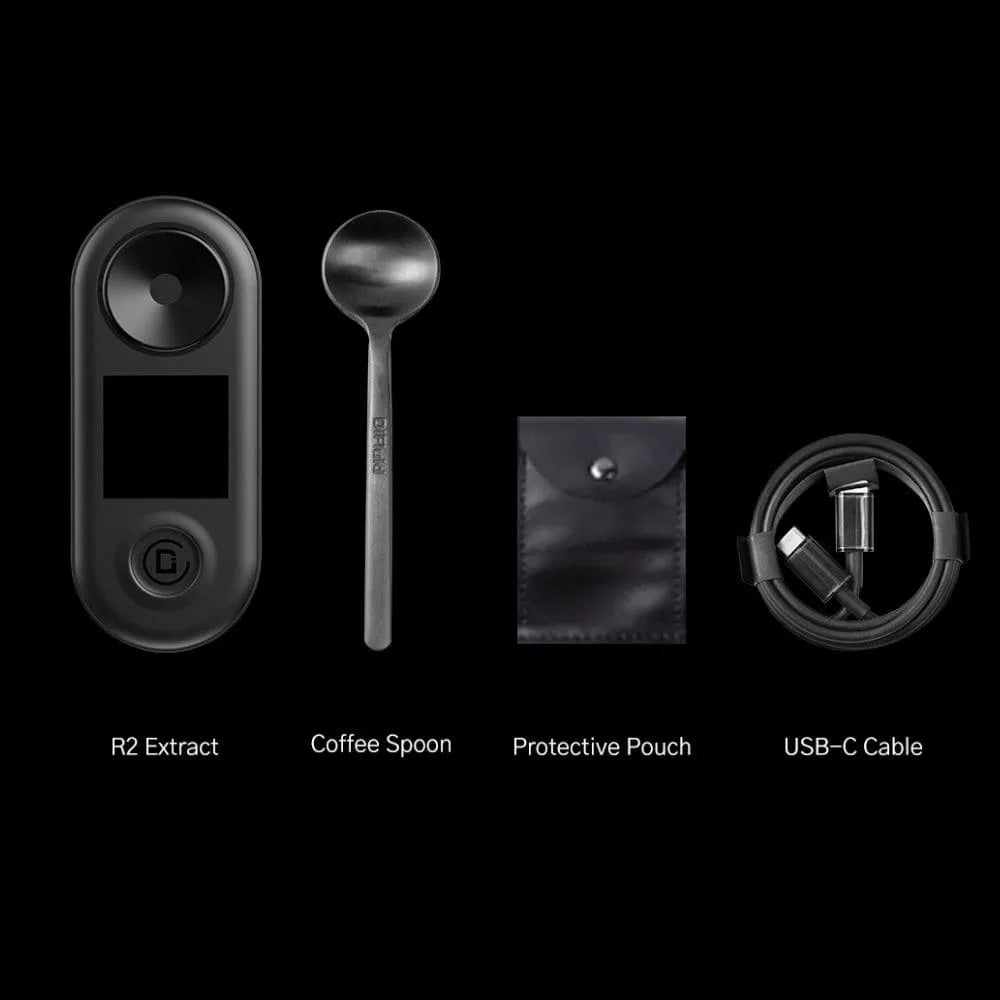
DiFluid R2 Extract Coffee Refractometer (TDS Meter)
Precise and powerful variable pressure delivered by a DC rotary pump. Even the slightest vibration of the paddle is accurately reflected in the extraction. Create a single recipe perfected by your intuition. Start the evolved barista experience with ZETA.
Don't just weigh it — analyse it
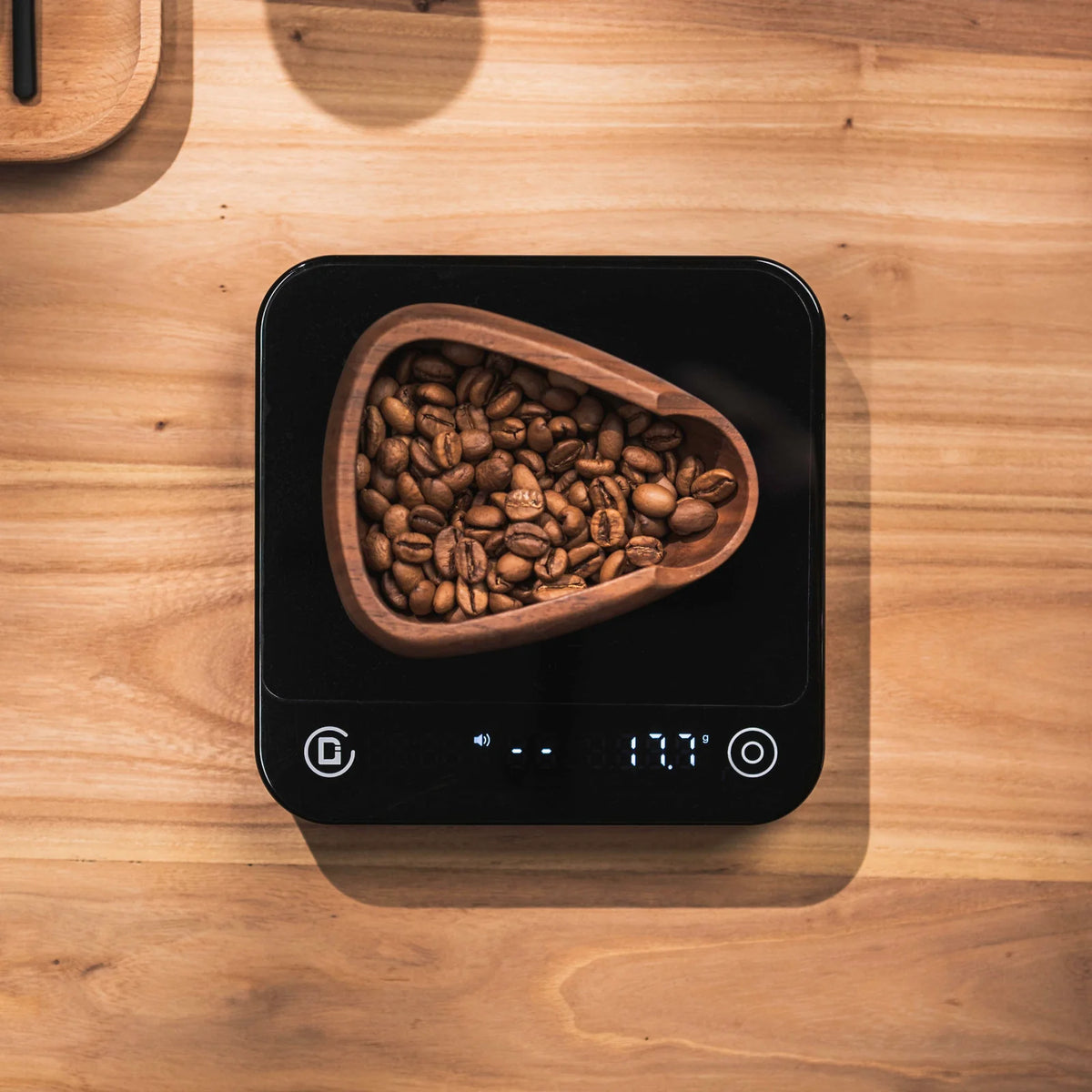
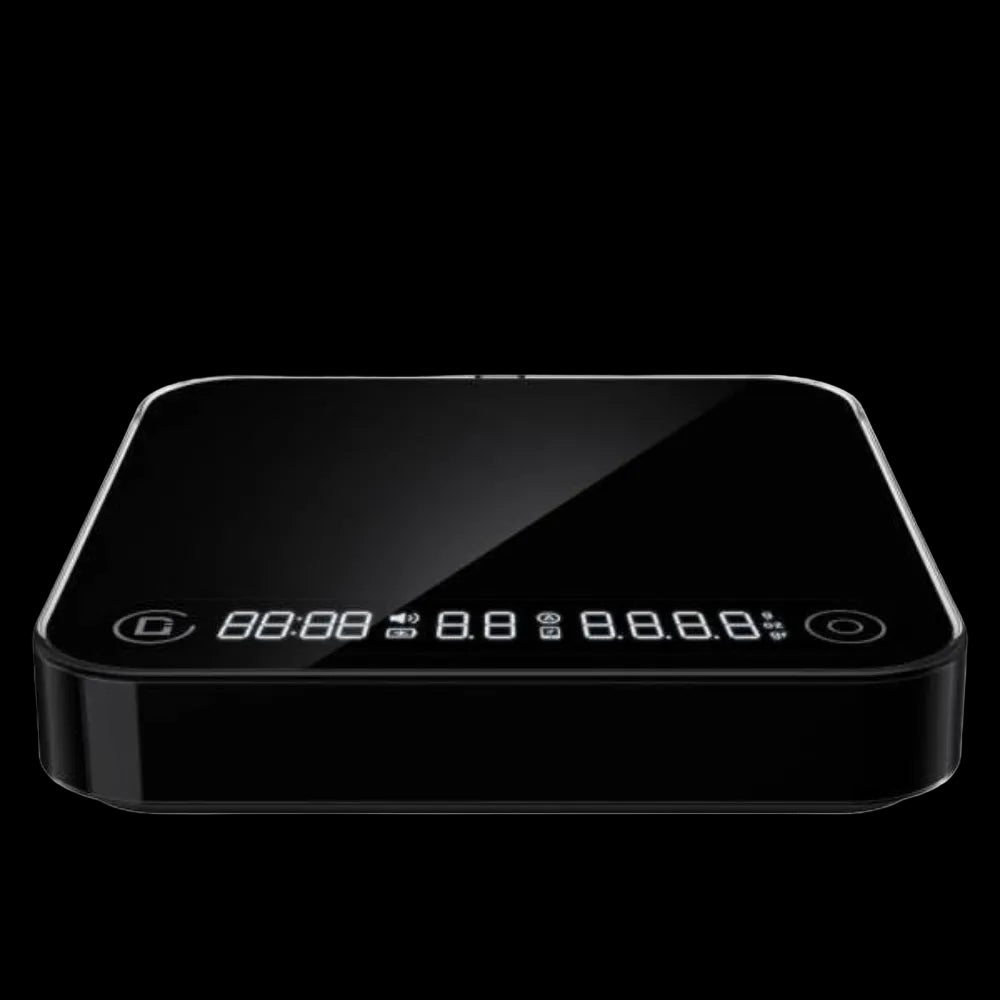
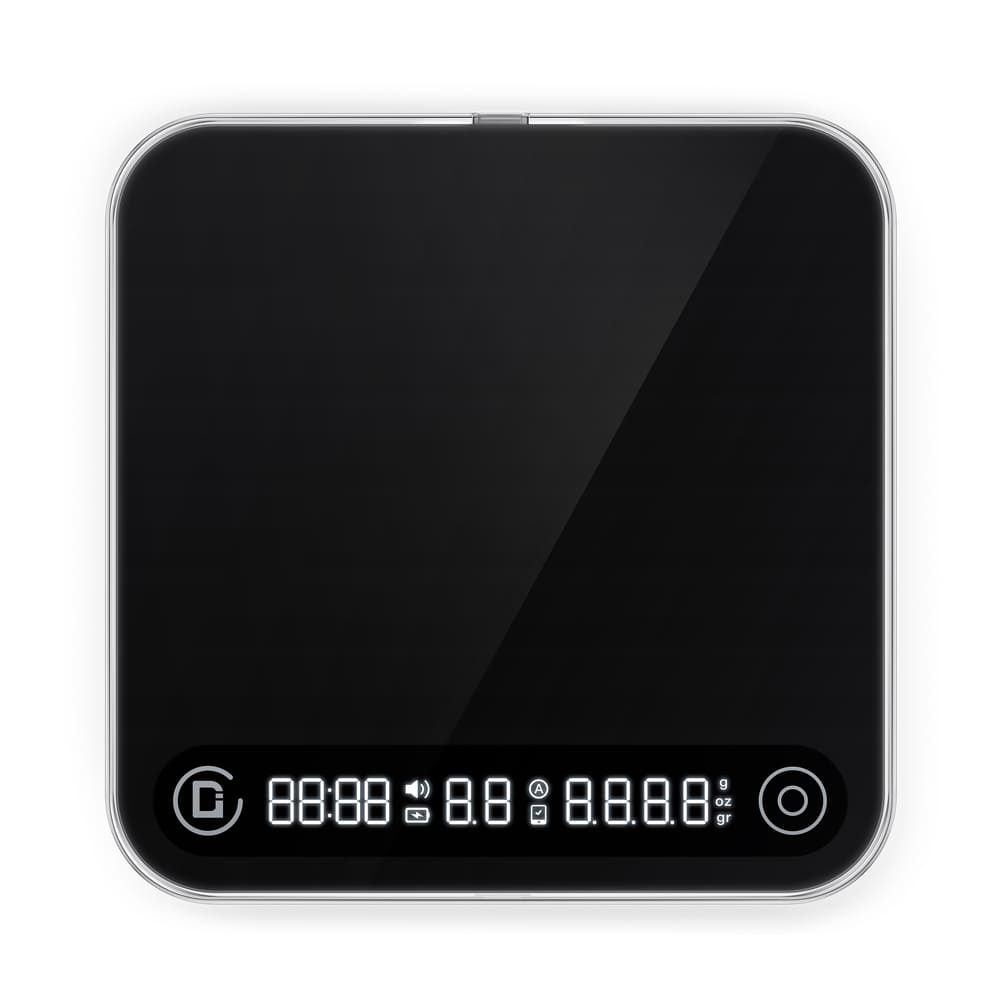
DiFluid Microbalance Ti Precision Brewing Scale
It can measure very precisely (0.1 g), it is very fast (200 ms), and it can hold 3,000 g. The improved Ti algorithm filters out the vibrations from your grinder or espresso machine, so the display doesn't jump around.
The device can show you the weight, time and flow rate (in grams per second), and it will automatically start when you turn it on. It has a 2500 mAh battery that will last for 25 hours or more, and it can be charged using a USB-C cable. The device will update itself automatically when new versions are available, and it works with CoffeeOS. Pair it with the R2 Extract for complete TDS and extraction analysis.
Two lab instruments in one device
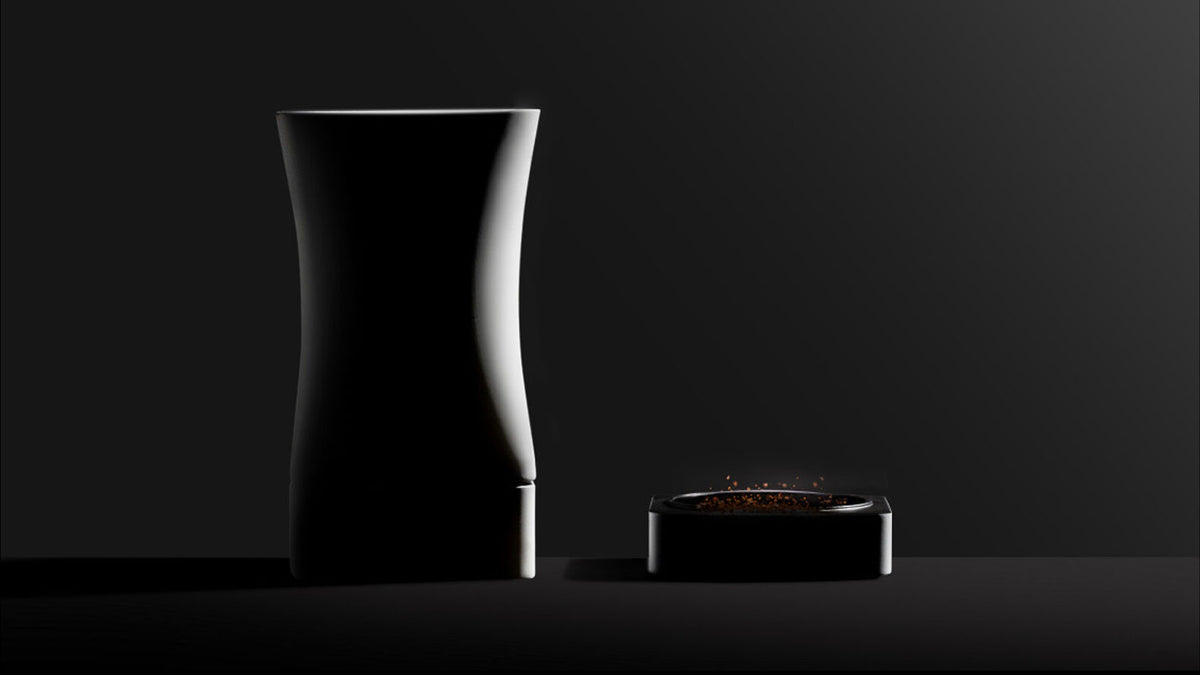
DiFluid Omni Roast Level & Particle Size Analyzer
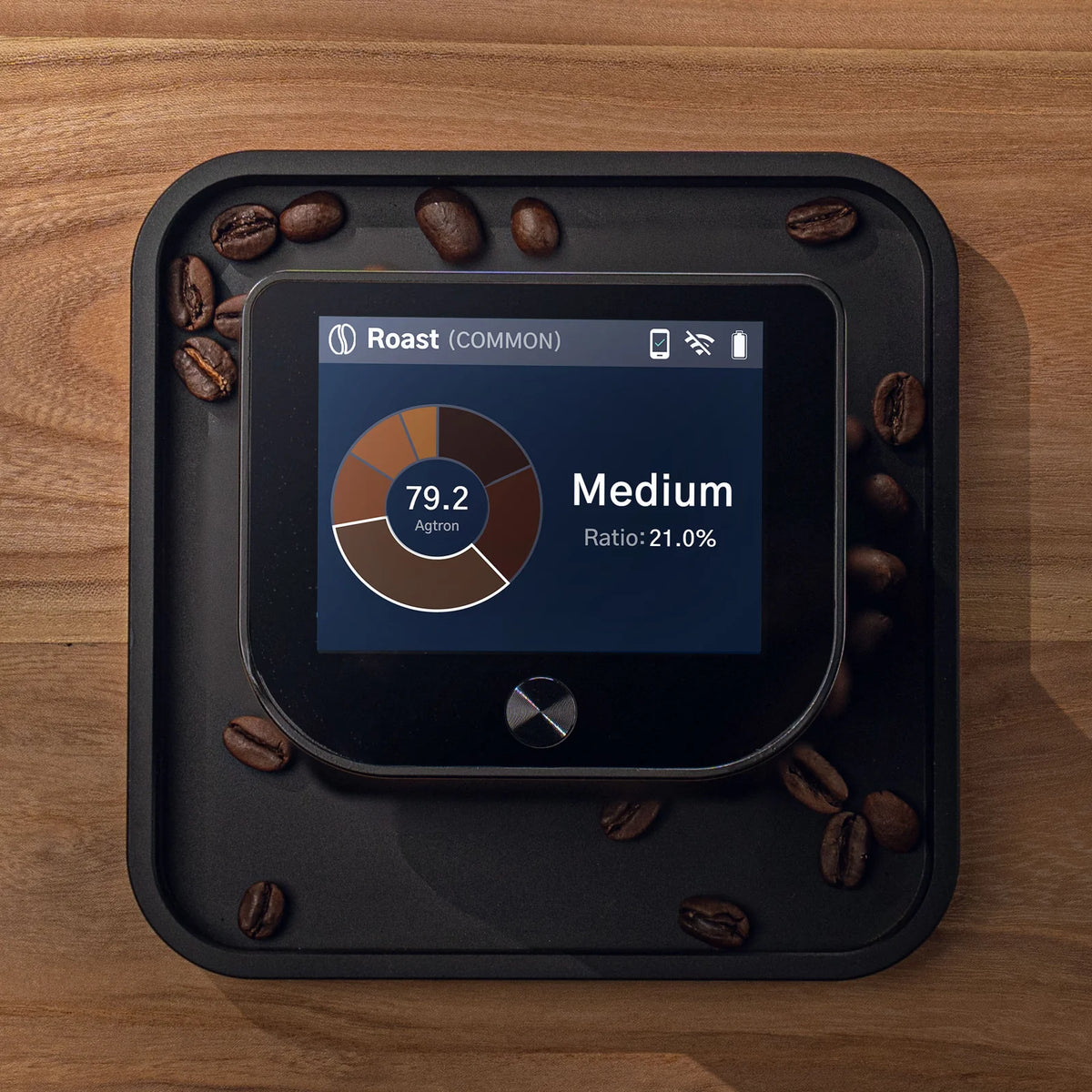
The Omni measures how well the coffee has been roasted on a scale of 0–150 Agtron (with 0.1 precision and 0.1 resolution) using 2D near-infrared imaging — and shows how the colour is spread across the whole sample, including how even the colour is, how much the colour has changed and where the peak is.
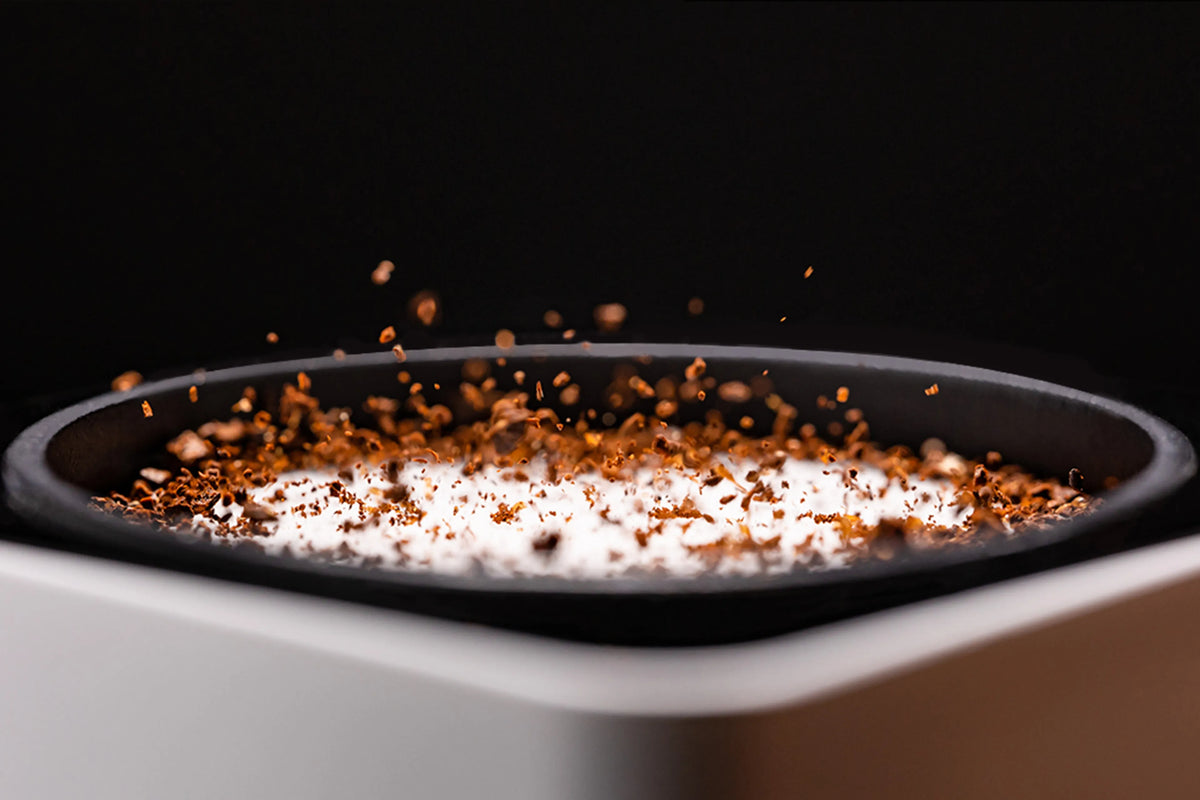
It also looks at how small the grind particles are, ranging from 100–2500 µm, and shows how they are distributed (D10/D50/D90, standard deviation). Smart vibration levels the sample automatically, no preheating is needed, and everything is controlled on a 2.8-inch touchscreen with CoffeeOS sync. This is for people who work in coffee shops and for people who make coffee. It helps them compare grinders and roasts in a fair way.
Roast to colour, not just to temperature
DiFluid OmniFlux Live Roast Colour Tracker
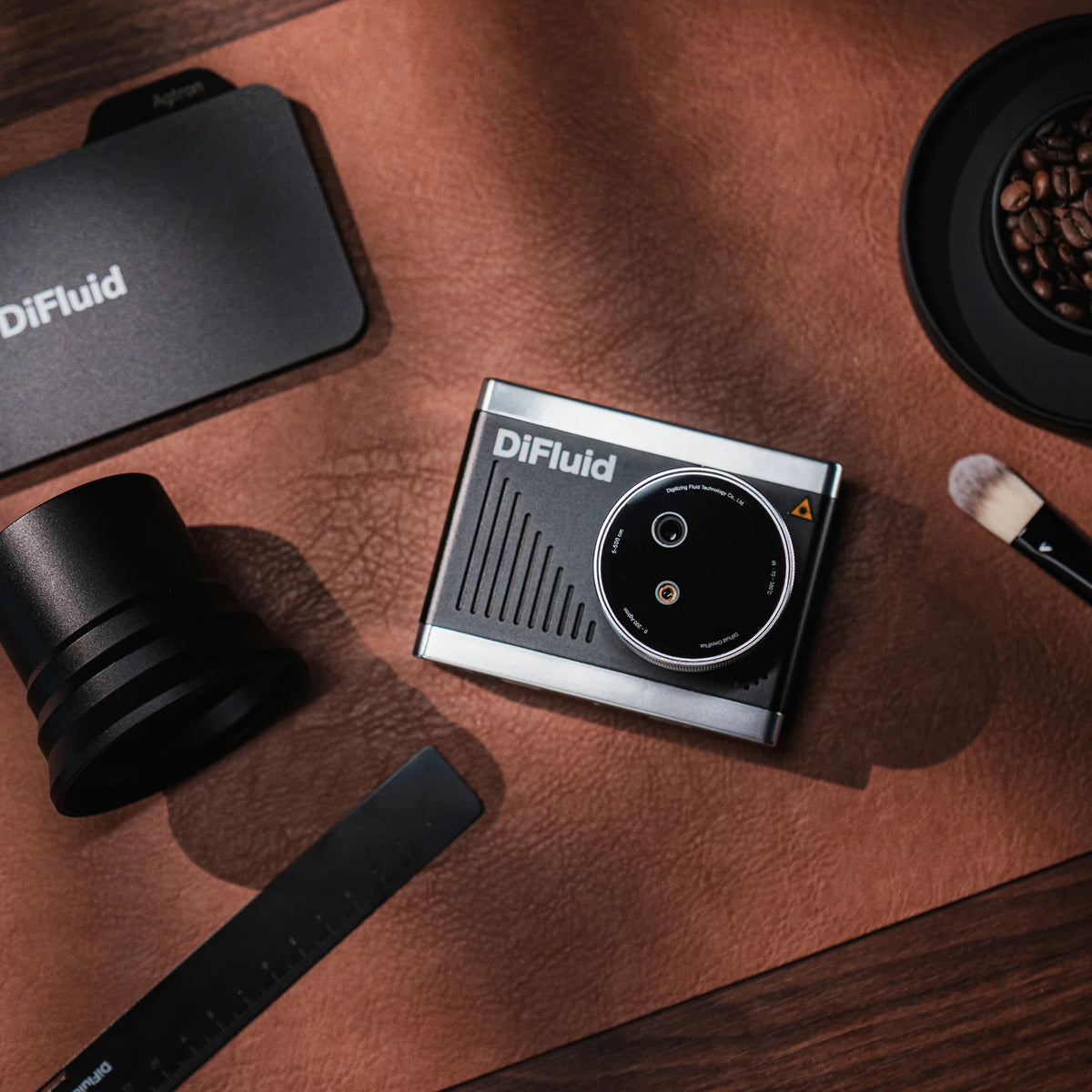
The OmniFlux is a tool that attaches to your roaster and constantly checks the colour of the roasting process. It provides a live update of the colour as it changes during the roast, rather than just one reading at the end. It has an infrared thermometer that can measure temperatures between 0 and 320°C. This means that the cooling rate data is recorded for each roast. It also has two external temperature probe inputs. These let you record data about the beans and the environment, as well as the colour of the beans. A laser rangefinder handles calibration (and can be used as a measuring tool on its own), up to 500 roasts can be stored on the device, and full Artisan integration means colour data flows straight into your existing profiling software. Set a target colour, get notified when you hit it, and let OmniFlux automatically control the AirWave's airflow while you focus on the roast.
Roast anywhere. Vent nowhere.
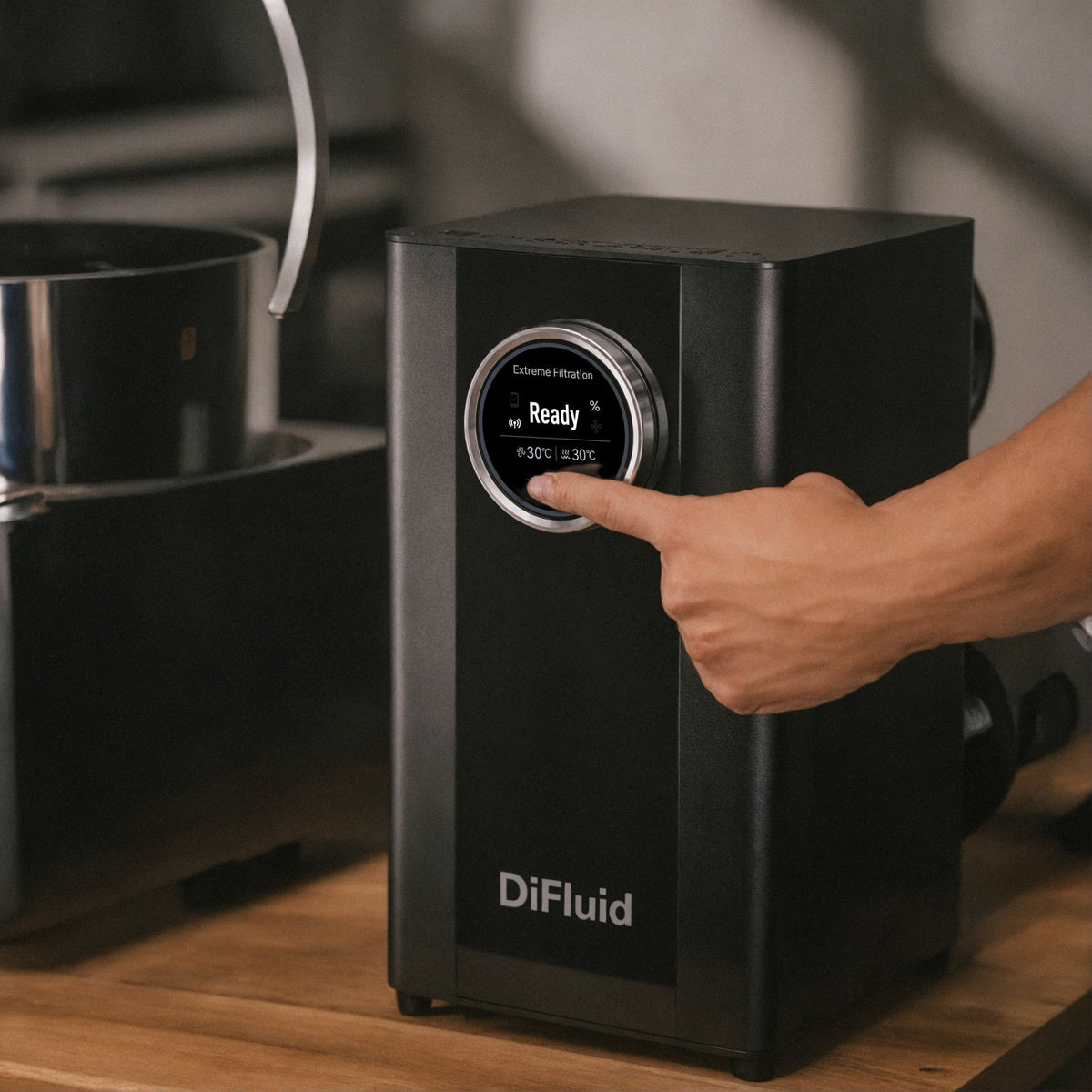
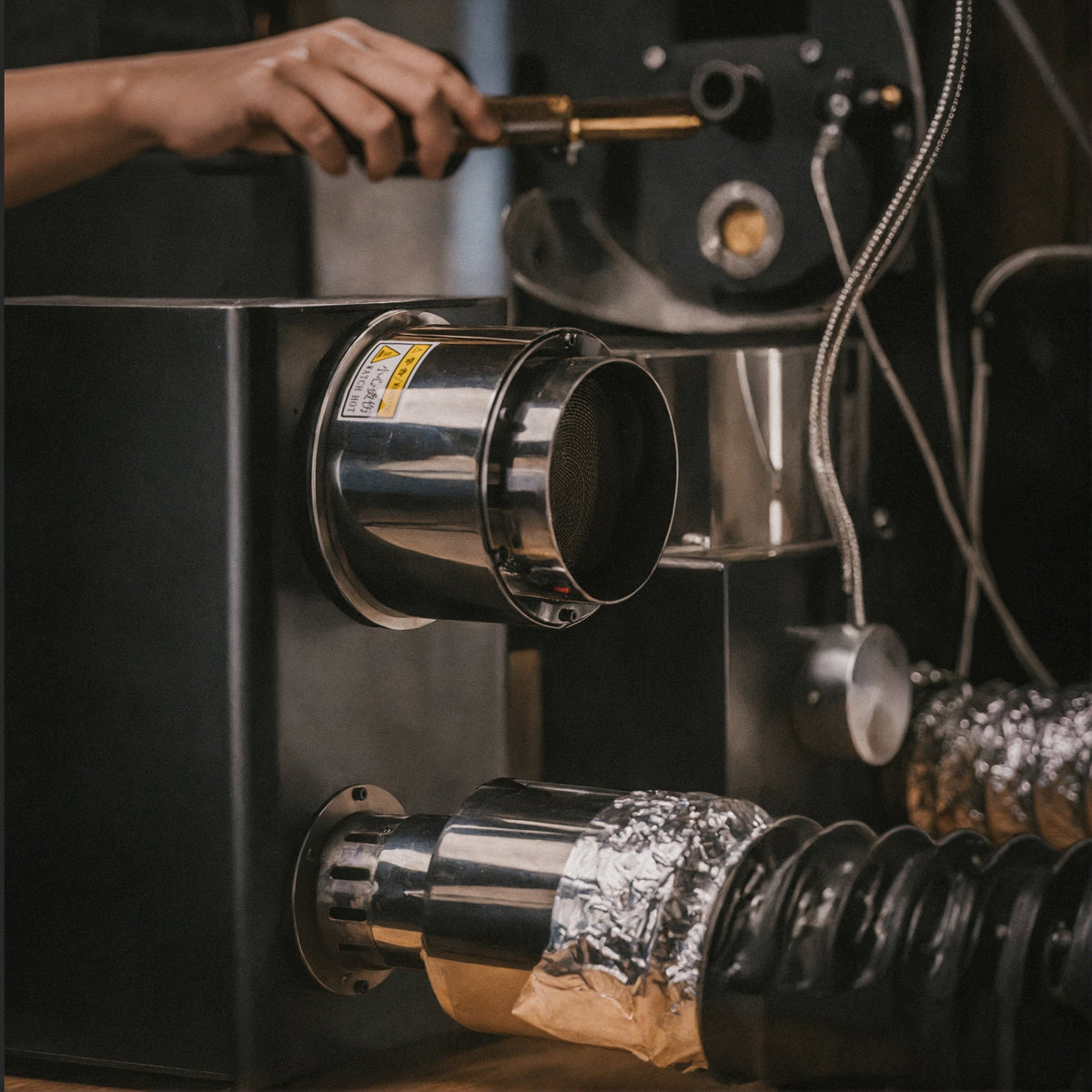
DiFluid AirWave Roast Smoke & Odour Eliminator
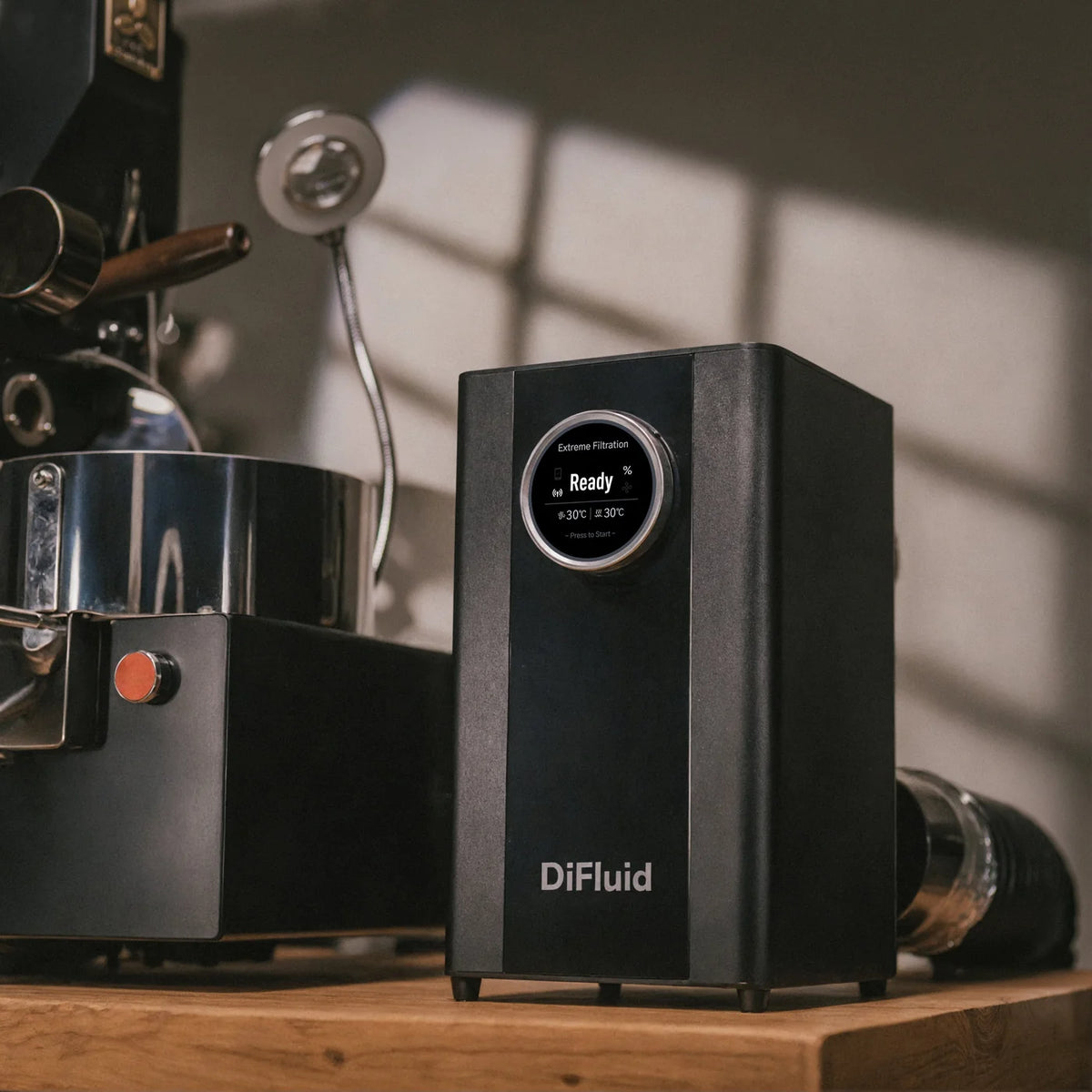
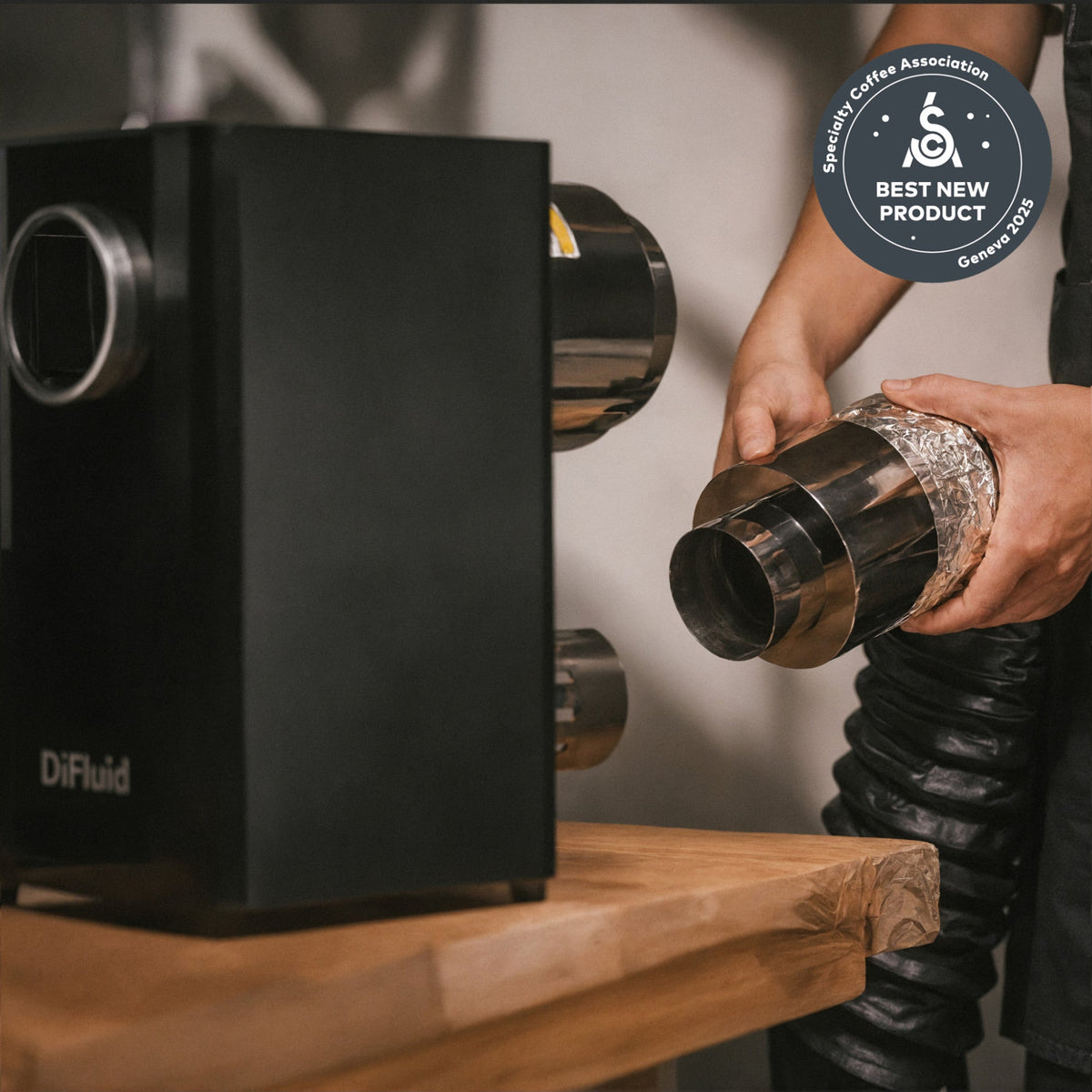
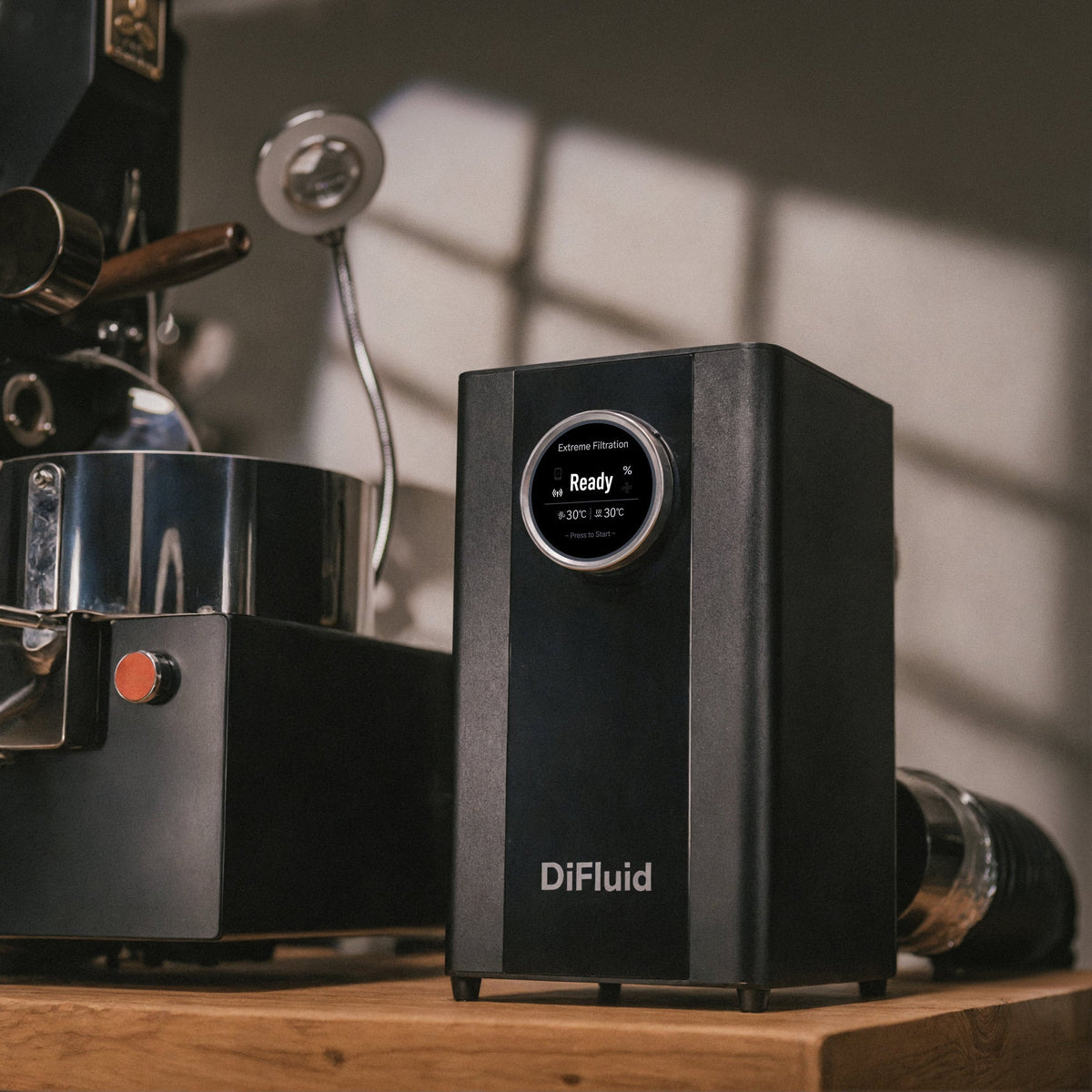
The AirWave gets rid of all the smoke, making it much easier to roast coffee in small batches. Its NovaCat monometal catalytic block changes smoke, smells and VOCs into CO₂ and water vapour — getting rid of up to 99.9% of smoke particles and pollutants without making ozone or using exhaust ducting. It can reach 130 cubic metres per hour in Standard mode (up to 250°C), Extreme mode (up to 300°C) and fan-only modes. A magnetic chaff collector catches silver skins, and a built-in self-cleaning cycle clears oil and dust to extend the life of the catalyst. The insulated housing stays touch-safe even during long sessions. Pair it with the OmniFlux to control the airflow automatically — perfect for sample roasters and home setups up to 1 kg.
DiFluid Product Collection
FAQs about DiFluid
What does a DiFluid coffee refractometer measure?
A DiFluid refractometer measures TDS (total dissolved solids), which is the percentage of dissolved coffee compounds in your brew. The CoffeeOS app can calculate the amount of coffee and how strong it is, using information from TDS, the amount of coffee and the beverage weight. This means that the strength of the coffee can be measured and every successful recipe can be made again and again, whether you want espresso or filter coffee.
How do you calculate coffee extraction yield?
The amount of coffee you can get from a certain amount of coffee beans is calculated by multiplying how much coffee you brew (in grams), the TDS percentage (which is the total dissolved solids percentage), and the coffee dose (in grams). For example: To get 20% extraction, you just multiply 36 grams of espresso by 10% TDS and then divide that by 18 grams of coffee. The range of 18–22% is often used as a sensory target — a guideline, not a promise. In the end, it's all about the taste.
What is a good TDS for espresso and filter coffee?
Espresso typically has around 8–12% TDS, while filter coffee usually has around 1.3–1.55%. These are the usual levels for specialty coffee, but they don't guarantee the flavour will be the same. Your own taste is the best judge. The DiFluid R2 Extract is perfect for both types of brewing because it can measure between 0–30% TDS.
How accurate is the DiFluid R2 Extract?
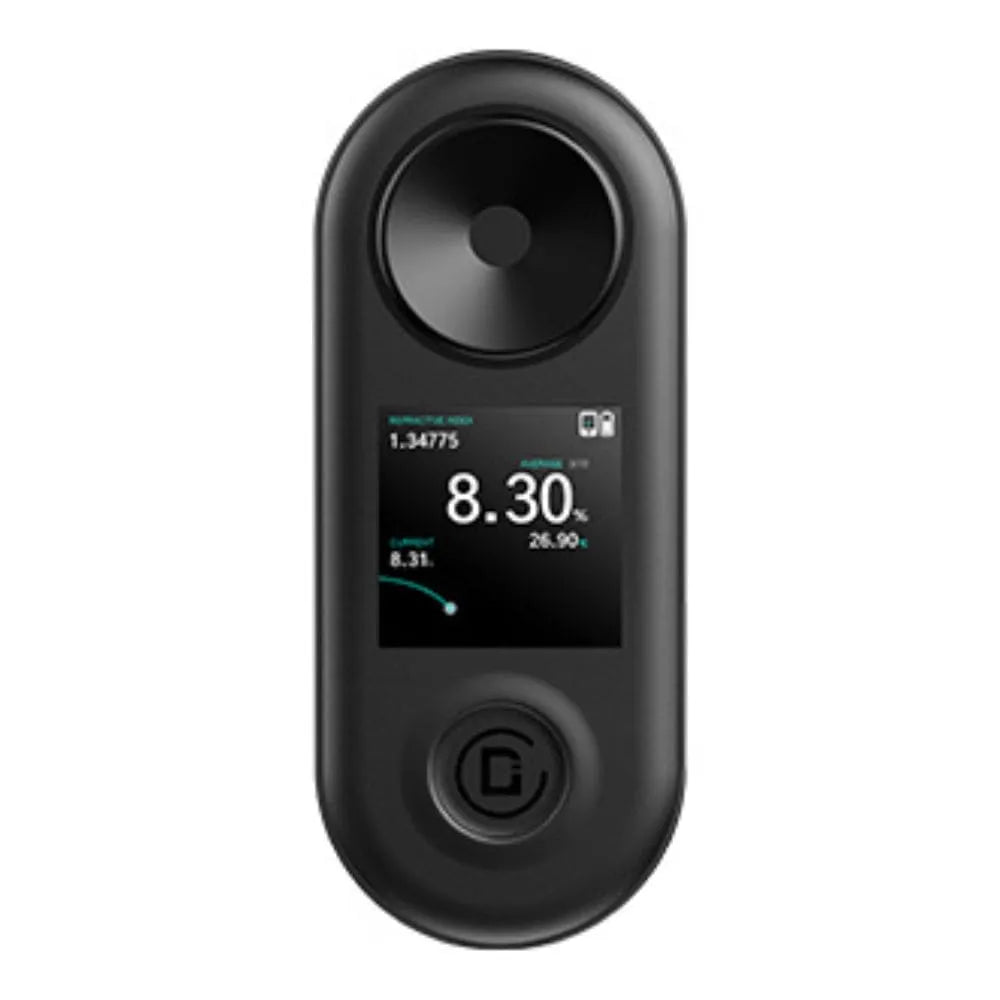
The R2 Extract is very precise, with a margin of error of ±0.02% and an accuracy of ±0.03% at 0.01% resolution. Independent comparison tests (including work by Robert McKeon Aloe and Socratic Coffee) found that there was less variation between devices than the original DiFluid model, and the results were similar to those of VST and Atago instruments.
DiFluid R2 or VST — which is better?
VST is the most popular choice at world championships, but it costs about 700–800 US dollars and has slightly more variation between readings. The DiFluid R2 Extract is almost as accurate as the others, but costs much less. It can connect to apps, has a colour display and IP67 protection. Most baristas and roasters find the R2 is the better choice.
Do I need to filter espresso before measuring TDS?
For maximum accuracy, yes: espresso contains suspended solids and oils that can skew the reading, and a syringe filter removes them. Thanks to its large CMOS sensor, the R2 Extract still gives usable readings unfiltered — but filtered samples are measurably more precise and repeatable. Filter coffee can be measured directly.
Do DiFluid devices require the app?
No, the scale and refractometer work on their own — just switch them on and measure. The CoffeeOS app (via Bluetooth) unlocks extras like automatic extraction yield calculation, the Brew Control Chart, a searchable brew log and free firmware updates that improve the devices over time. It's great to be connected, but it's not essential.
Does Vellutto ship DiFluid across the EU and EEA?
Yes. Vellutto ships DiFluid with full insurance throughout the EU and EEA — including Germany, the Netherlands, Austria, France and the Nordics. Orders are usually sent out within two days and are fully insured. If you need help choosing a model, have a question about calibration or accessories, our support team is here to help. You can contact us via chat, WhatsApp or email.
What does the DiFluid Omni measure?
The DiFluid Omni measures two things: how well the coffee has been roasted on a scale from 0 to 150 Agtron, using a special kind of imaging called near-infrared imaging, and the size of the grind, in micrometers (µm), from 100 to 2500. Unlike single-point colour meters, it maps the full distribution across the sample — including uniformity, D10/D50/D90 and standard deviation — so roasters and baristas can compare roasts and grinders objectively.
What is the Agtron scale in coffee roasting?
The Agtron scale is the most common way to measure the level of roasting of coffee by looking at the colour. The darker the roast, the lower the number. Lighter roasts have higher numbers. Most specialty coffee falls between 55 and 75. The DiFluid Omni can measure Agtron from 0–150 with an accuracy of ±0.1. This gives roasters an objective reference to judge colour, instead of relying on their own perception.
What is the difference between the DiFluid Microbalance and Microbalance Ti?
Both scales offer 0.1 g resolution, flow rate display and CoffeeOS sync. The Microbalance Ti adds a higher 3000 g capacity (vs 2000 g), a faster 200 ms tare, a larger 2500 mAh battery with 25+ hours of runtime, and an upgraded vibration-filtering algorithm for steadier readings next to running machines. The original Microbalance remains the more affordable entry point.
Why measure water activity in green coffee?
Water activity (Aw) indicates how much free water in green coffee is available for microbial growth and chemical change — it predicts storage stability, mould risk and flavour degradation better than moisture content alone. The DiFluid Omix Plus measures it with the chilled-mirror dew point method, the reference technique used in food-science labs, in under 30 seconds.
What does the DiFluid OmniFlux do?
The OmniFlux monitors the colour of the roast as it roasts, rather than measuring the colour of the finished batch only. When it is put on the roaster, it shows the colour change as it happens and keeps a record of how quickly it cools using an infrared thermometer that can go from 0 to 320°C. It can also take two extra temperature measurements from outside, and can remember the details of up to 500 different roasts. It can even control the AirWave smoke filter's airflow automatically.
Does the DiFluid OmniFlux work with Artisan?
Yes. The OmniFlux works with Artisan, the open-source software for measuring the roasting process, so you can get live colour data that flows directly into your existing roast curves alongside temperature. This lets you monitor the colour of the roasts as they cook, and even set the machine to a specific colour as a target.
Can I roast coffee indoors without an exhaust using the DiFluid AirWave?
Yes — that is exactly what the AirWave is built for. Its NovaCat catalytic block changes smoke, smells and VOCs into CO₂ and water vapour, getting rid of up to 99.9% of smoke particles without ducting or ozone formation. It can move up to 130 cubic metres of air per hour, making it great for use in places like sample roasters and home setups that can handle up to about 1 kilogram of material at a time.
What is the DiFluid Moment?
The Moment is a contactless infrared flavour thermometer for the cup. It reads the temperature of your coffee's surface right away and shows the tasting notes that you can expect at that temperature, because the flavour of coffee changes as a cup cools. It is connected to the CoffeeOS cupping log, which means it can be used to check the quality of the coffee and to let guests try different types of coffee.
